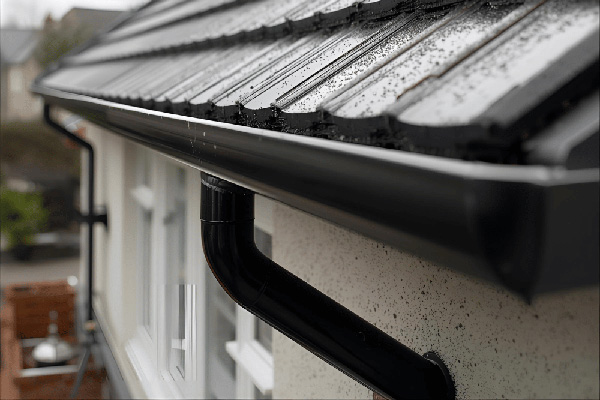
Cracks, Splits or Holes
Small isolated cracks can sometimes be repaired, particularly when the rest of the guttering is in good condition.
If cracks, holes or split joints are appearing across several sections, however, this can indicate that the material itself is deteriorating. Continually sealing new leaks may only provide a temporary solution.
Sagging or Pulling Away From the Roofline
Gutters should sit securely along the roofline and direct water towards the downpipes.
If sections are visibly sagging, bowing or pulling away from the fascia boards, water may begin pooling in the gutter or spilling over the edges.
A single damaged bracket may be repairable. Widespread sagging can indicate a bigger problem with the guttering, fixings or supporting fascia.
Persistent Leaks
An occasional leak at one joint does not necessarily mean the whole gutter system needs replacing.
The concern is when leaks continue appearing in different areas despite previous repairs. If sections have been resealed several times and problems keep returning, replacing the affected gutter runs may provide a more reliable solution.
Rust or Corrosion
Metal gutters should be checked for corrosion, particularly around joints, fixings and areas where water regularly collects.
A small isolated patch may be manageable, but widespread rust or deterioration can weaken the guttering and make further leaks more likely.
Water Overflowing During Rain
Overflowing gutters are often caused by leaves, moss or other debris, so cleaning should usually be the first step.
If the gutters continue to overflow after they have been cleared, the system may be damaged, badly aligned or no longer draining effectively.
Water marks on fascia boards, soffits and exterior walls can also indicate that rainwater is not being carried away properly.